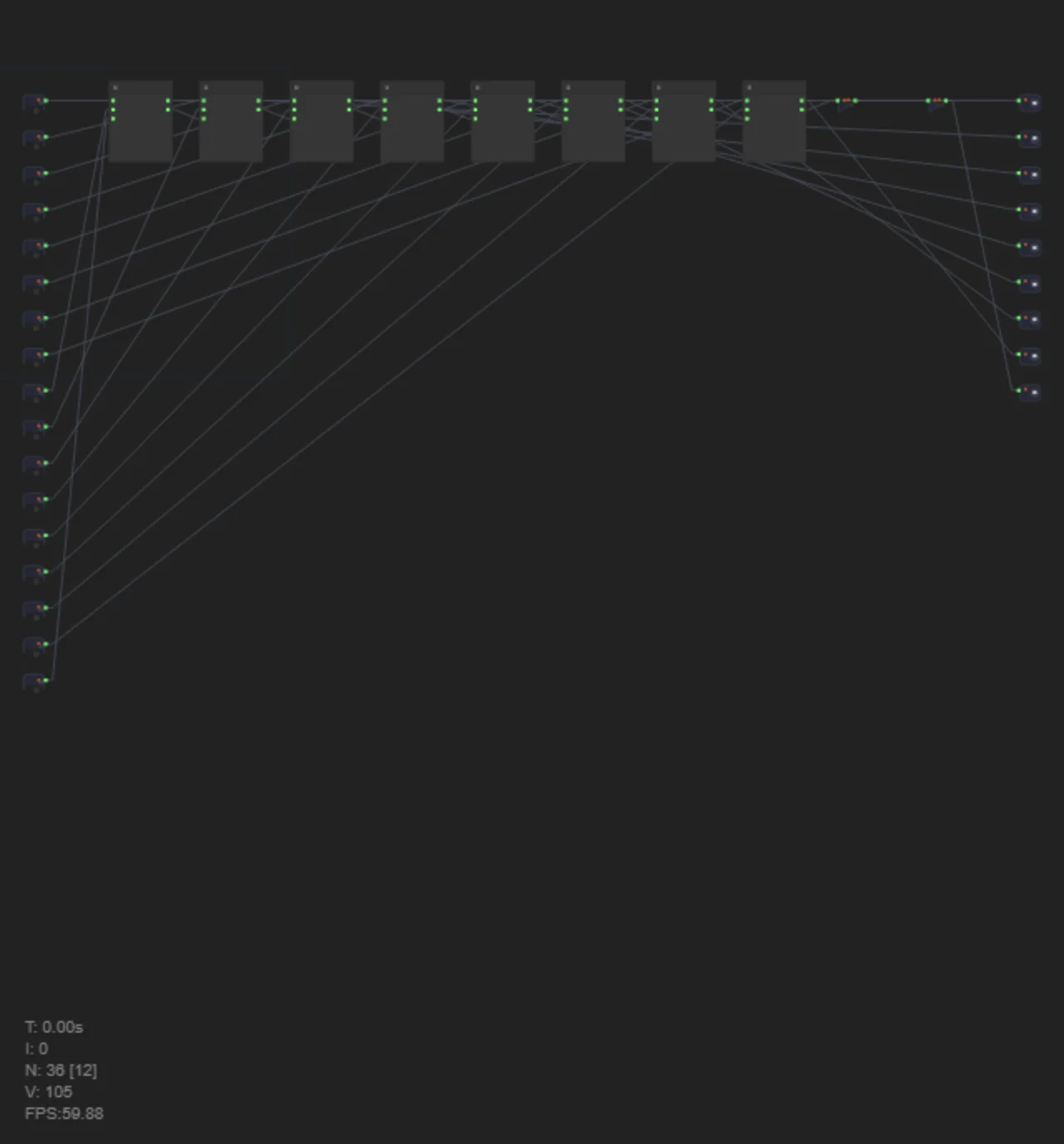
Level 35: Data Buses (Adder8)
Task
Write an 8-bit adder (Adder8) in Verilog. It adds two 8-bit buses a[7:0] and b[7:0] with carry-in c_in. Outputs: sum[7:0] and carry-out c_out.
Use 8 instances of the FullAdder module (from level 34) connected in a ripple-carry chain.
Related Materials
- Adder8 — 8-bit adder
- Full Adder — single-bit full adder
Solution for self-check
Try building the circuit yourself first. The solution below is a way to check yourself if you're stuck or have already solved it.
The in-game hint on this level inserts a code scaffold: without one line — FullAdder fa4, the link of the carry chain. Write the line yourself: without it the 4th sum bit never settles.
An 8-bit adder is a chain of 8 full adders where each one's carry-out feeds the next one's carry-in. The carry "ripples" from the least significant bit to the most significant bit (ripple carry).
Port order of FullAdder: (sum, c_out, a, b, c_in).
- The boilerplate already declares a carry bus:
wire [7:0] c;. Addwire w;for the output buffer. - Bit 0 (least significant) takes the external
c_in:FullAdder fa0(sum[0], c[0], a[0], b[0], c_in); - Bits 1–7: each FullAdder gets its carry from the previous one:
FullAdder fa1(sum[1], c[1], a[1], b[1], c[0]);FullAdder fa2(sum[2], c[2], a[2], b[2], c[1]);and so on up tofa7. - The final carry
c[7]needs to be buffered through two consecutive NOT gates (double negation doesn't change the signal but provides a buffer):not g1(w, c[7]);not g2(c_out, w);
Bus bit access uses square brackets: a[0], b[3]. All 8 adders work simultaneously — the chain exists in hardware, not in line order.